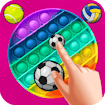
7×7 Ultimate: Stunning Best Puzzle Challenge
If you enjoy puzzle games that reward patience, planning, and quick thinking, 7×7 Ultimate delivers exactly that kind of satisfying challenge. At first glance, it looks simple: slide colorful blocks across a grid and try to line up matching pieces. But once you start playing, the game quickly reveals its true depth. Every move matters, every placement counts, and one poor decision can push the board closer to overflow.
The appeal of 7×7 Ultimate lies in its balance of simplicity and tension. The rules are easy to learn, yet the gameplay becomes increasingly strategic as the grid fills up. You are not just moving blocks for the sake of it—you are constantly thinking ahead, managing space, and searching for the best sequence of moves to clear lines before the board becomes too crowded.
What Makes 7×7 Ultimate So Addictive?
7×7 Ultimate stands out because it creates a constant sense of urgency without feeling overwhelming. The board is compact, which means every square has value. When you place a block in the wrong position, it can block future matches and limit your options. On the other hand, a smart move can create a chain of opportunities that helps you clear multiple lines and recover precious space.
This push-and-pull is what makes the game so engaging. You are always working against the board, but you are also building toward a bigger payoff. The satisfaction of clearing a line of four or more blocks is immediate, and that reward keeps you coming back for just one more round.
Unlike many puzzle games that rely on speed alone, 7×7 Ultimate asks you to think strategically. You must judge not only where a block fits now, but also how that move will affect the layout several turns later. That layered thinking gives the game a strong replay value, since no two rounds unfold exactly the same way.
How to Play 7×7 Ultimate
The core gameplay in 7×7 Ultimate is straightforward. Colorful blocks appear on the grid, and you slide them into place to form rows or columns of matching blocks. When you create a line of four or more, those blocks clear from the board, freeing space for new moves.
The challenge comes from the fact that each non-matching move adds more blocks to the grid. This means that every action has consequences. If you move carelessly, the board can fill up quickly and leave you with fewer ways to respond. If you plan well, however, you can keep the grid manageable and create openings for bigger clears.
Success depends on pattern recognition, spatial awareness, and patience. The best players are not just reacting to what is on the board right now—they are anticipating what will happen next. A good move may not clear blocks immediately, but it can set up a stronger opportunity in the future. In 7×7 Ultimate, preparation is often more valuable than speed.
7×7 Ultimate Strategy Tips
To improve your performance in 7×7 Ultimate, it helps to develop a few smart habits. One of the most important is to preserve open space whenever possible. The more empty squares you have available, the more flexibility you keep for future moves.
Another useful strategy is to avoid placing blocks randomly around the board. Instead, try to build with intention. Look for areas where matching blocks can be grouped efficiently, and keep an eye on potential line clears before committing to a move. A small advantage early in the game can become a major benefit later on.
It is also wise to think about balance. If one section of the grid becomes too crowded, you may lose the ability to create useful matches there. Spreading blocks in a controlled way can help you maintain more options across the whole board.
When possible, prioritize moves that contribute to multiple potential clears. Even if a single placement does not immediately clear a line, it may help connect several matching pieces and set up a more powerful turn. The best players in 7×7 Ultimate are always looking for these opportunities to create efficiency on the board.
Finally, stay calm when the grid starts to tighten. Panic often leads to poor placement, and poor placement makes the board fill even faster. A steady approach will usually serve you better than rushed decisions.
Why Players Keep Coming Back to 7×7 Ultimate
One of the biggest strengths of 7×7 Ultimate is its replayability. Because each session creates new patterns and challenges, the game never feels exactly the same twice. You might have one round where you clear the board with confidence, and another where the grid becomes difficult to manage almost immediately. That unpredictability keeps the experience fresh.
The game is also highly satisfying for players who enjoy visible progress. Clearing lines, opening space, and recovering from a crowded board all provide a strong sense of accomplishment. Every successful move feels earned, especially when you manage to save yourself from a near-loss situation.
In addition, 7×7 Ultimate is ideal for short play sessions or longer bursts of focused gameplay. You can jump in for a quick challenge or spend more time trying to beat your own score. That flexibility makes it easy to return to again and again.
Final Thoughts on 7×7 Ultimate
7×7 Ultimate is a smart, addictive puzzle game that combines colorful visuals with tactical depth. Its simple mechanics make it easy to start, but its strategic demands keep it interesting over time. Every move forces you to weigh risk against reward, and every cleared line gives you a fresh chance to stay in control of the grid.
If you enjoy puzzle challenges that test your planning skills and reward careful thinking, 7×7 Ultimate is a standout choice. It captures the thrill of making the perfect move under pressure while offering endless opportunities to improve. Slide the blocks, clear the lines, protect your space, and see how long you can keep the board from overflowing. In the end, mastering 7×7 Ultimate is all about staying sharp, thinking ahead, and making every square count.
Game Tags
7x7 Ultimate, block puzzle, brain teaser, casual gaming, grid puzzle, line clearing, logic puzzle, mobile puzzle game, puzzle game, strategy game