Tile Puzzle Game: Stunning Best Brain Challenge
A tile puzzle game is a simple idea with surprisingly deep appeal. It combines clean visuals, satisfying movement, and just the right amount of mental challenge to keep players engaged. At first glance, it may look like a straightforward number puzzle, but once you begin sliding tiles and trying to restore order from chaos, you quickly realize how much strategy, memory, and spatial reasoning it demands.
This type of game is perfect for players who enjoy solving problems under pressure. Whether you’re trying to beat the clock, improve your move count, or simply enjoy a relaxing yet stimulating experience, a tile puzzle game offers a rewarding test for the mind. Every move matters, and every decision brings you closer to victory or back to the beginning.
What Makes a Tile Puzzle Game So Engaging?
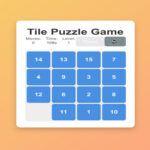
The charm of a tile puzzle game lies in its balance of simplicity and challenge. The rules are easy to understand: tiles are arranged in a shuffled grid, and one space is left empty so you can slide pieces around. Your goal is to put the tiles back into the correct numerical order. That sounds easy enough, but the challenge grows quickly as you try to plan each move without trapping yourself.
This combination of accessibility and difficulty makes the game appealing to players of all ages. Beginners can enjoy the basic mechanics right away, while more experienced players can focus on efficiency, pattern recognition, and speed. It is the kind of game that feels instantly familiar but never boring.
Tile Puzzle Game Gameplay: Simple to Learn, Hard to Master
The gameplay in a tile puzzle game is straightforward. You start with a grid of numbered tiles that have been randomly shuffled. One space in the grid is left blank, and that empty spot is the key to moving the tiles. By sliding adjacent tiles into the empty space, you gradually work toward the correct arrangement.
What makes the game so interesting is the need to think ahead. A move that seems helpful in the moment may create problems later if it blocks access to another tile. Successful players learn to recognize patterns, anticipate outcomes, and build a sequence of moves that leads to the solution.
Many versions of the tile puzzle game also include a timer and move counter. These features add extra excitement and encourage players to improve with each attempt. The timer pushes you to solve the puzzle quickly, while the move counter rewards careful planning and efficiency. Together, they turn a simple puzzle into a true brain challenge.
Why the Tile Puzzle Game Sharpens the Mind
One of the biggest reasons people enjoy a tile puzzle game is the mental workout it provides. Solving the puzzle requires concentration, patience, and logical thinking. You have to analyze the board, remember tile positions, and decide on the best sequence of moves. This kind of gameplay helps strengthen several cognitive skills at once.
Spatial reasoning is especially important. You must visualize how moving one tile will affect the rest of the board, often several steps ahead. This makes the game an excellent exercise for the brain, especially for players who want a fun way to stay mentally active.
The game also encourages persistence. Not every puzzle is solved on the first try, and that is part of the appeal. Each attempt teaches you something new, whether it’s a better strategy, a faster route, or a smarter way to approach the grid. Over time, you naturally improve through practice.
Strategies for Playing Tile Puzzle Game Better
If you want to get better at a tile puzzle game, it helps to develop a few basic strategies. One of the most useful techniques is to focus on solving the puzzle in sections rather than trying to fix the entire board at once. Concentrating on one row or one area can make the challenge feel more manageable.
It is also important to avoid random sliding. Every move should have a purpose. Before moving a tile, think about whether it brings you closer to the final arrangement or creates more confusion. Planning ahead can save valuable time and reduce unnecessary moves.
Another helpful approach is to keep track of tile patterns. As you play more often, you begin to recognize common sequences and board states. This familiarity allows you to respond more quickly and make smarter decisions under pressure. In a tile puzzle game, experience often matters just as much as speed.
A Great Choice for Quick Play Sessions
A tile puzzle game is ideal for short breaks, casual play sessions, or longer moments when you want to challenge yourself. Because the rules are easy to grasp, you can jump in immediately without a long learning curve. At the same time, the puzzle is engaging enough to hold your attention and keep you coming back for another round.
The visual design also adds to the experience. Clean tile layouts and smooth sliding movements make the game satisfying to watch and play. The combination of structure and motion creates a calming but focused atmosphere that many players find enjoyable.
Final Thoughts on Tile Puzzle Game
A tile puzzle game is more than just a simple pastime. It is a smart, entertaining, and visually pleasing brain challenge that tests your logic, patience, and problem-solving ability. With its shuffled tiles, empty space, timer, and move counter, the game delivers a satisfying mix of tension and reward.
Whether you are a casual player looking for a fun mental break or someone who enjoys improving with every attempt, the tile puzzle game offers lasting appeal. It is easy to start, rewarding to master, and always ready to challenge your mind in a fresh way.
Game Tags
brain challenge, casual gaming, Logic Game, mental workout, number puzzle, puzzle game, sliding puzzle, spatial reasoning, strategy game, tile puzzle game